|
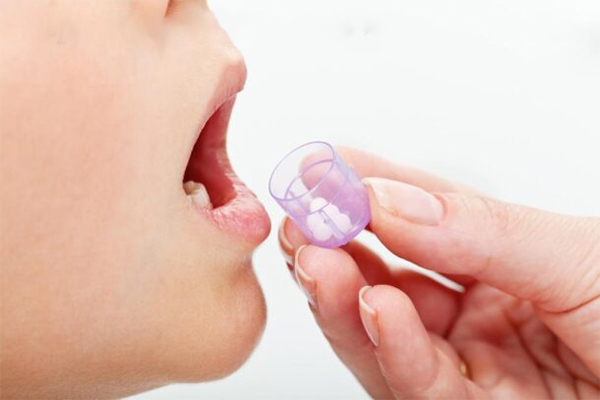
I am often asked which homeopathic remedies I would choose if I had to pick the most important and indispensable ones. The choice is not difficult for me, because this category includes all the remedies that are most commonly used; those homeopathic remedies that are so effective they cover a wide range of complaints.
On my list in this case would be Arnica, Hypericum, Aconitum, Belladonna, Ignatia, Rhus tox and my absolute favourite, Hepar sulphuricum calcarea, also known as Hepar sulfuris.
Hepar sulfuris, the all‑rounder
This little homeopathic powerhouse is indicated for conditions such as cough (particularly pseudocroup), sore throats, streptococcal infections, ear infections, blisters, furuncles, dental abscesses (use only D6 or C6), conjunctivitis (use D30 or C30), acne (usually best in C200), gland swellings, mastitis, certain forms of eczema, sepsis, bone infections and likely many others that I myself may not even be aware of.
It is often the remedy of choice for infections that smell of cheese, but any foul, infectious odour is a reason to consider Hepar sulfuris. Even when the infection is under control and an explicitly bad smell may not be apparent, it can still be a good choice.
Very sensitive patients
Another distinguishing feature when choosing this remedy is the patient’s sensitivity. If someone suffers from an infection that requires this homeopathic remedy, they are likely to be more susceptible to external influences such as the weather (especially cold), noises, light or chemicals.
It is almost as if these people have an internal amplifier, as if all the nerves are exposed and the skin or a protective covering is missing.
Often those affected perceive the pain associated with the infection much more intensely than the objective impression would suggest.
The appropriate potency level…
You should have the remedy at home in potency levels 6, 30 and 200, either in the D or the C scale. Then you can relax knowing that you and your family are equipped with the best defence against bacterial infections that can present as described above at any time. More information on dosage and potency of remedies can be found here.
If a child, for example, develops pseudocroup, Hepar sulfuris calc is recommended as part of an effective trio of homeopathic remedies. In that case we would give a C30 or D30 every 3–6 hours until the child is markedly better and the troublesome, often painful cough has eased.
For abscesses you can give different potencies depending on whether it is a dental abscess or a skin abscess. The best (and only) potency recommended for dental abscesses is D6, while D30 or C30 are ideal for external skin infections.
…and the right timing
If the infection is severe, the remedy should be taken every three to six hours; if not, twice a day is sufficient until the symptoms improve.
If you give the remedy in the correct potency, under the right circumstances and at appropriate intervals, I am sure you will never consider a conventional treatment again.
What I love most about this remedy is that it (and other comparable remedies) will protect your family from the after‑effects of conventional antibiotics.
I would even call it the homeopathic antibiotic.
Hepar sulfuris or antibiotics?
Hang on. Do I really mean that? Hepar sulfuris is not actually an antibiotic, because it has no side‑effects. Moreover, it is inexpensive and does not trigger anaphylactic (allergic) reactions. It does not cause long‑term dysbiosis in the gut. Nor does it cause arthritis.
Best of all, it is not prescription‑only. So you do not need to see your GP or make co‑payments (not to mention other pharmaceutical medicines you might have to buy to offset the effects of the prescribed “medicine”).
It does not wreck the immune system, it does not cause food intolerances or chronic constipation and … it heals in the long term.
Maybe I should really rethink all of this, because frankly Hepar sulfuris is anything but an antibiotic!
Hmm … perhaps that is exactly why I use it and why I think you should too.
Homeopathy helps – spread the word!
Warmly,
Yours
.png)
Source: https://joettecalabrese.com/blog/hepar-sulph-the-homeopathic-antibiotic/
|
