
Where does the plant come from and what does it look like?
Ginseng belongs to the Araliaceae family. It is mainly native to the forest regions of North America and East Asia. Ginseng is a nutrient-rich, perennial plant. The root is the focus because of its medicinal properties and constituents. Colloquially, the ginseng root is also known as sam root, gilgen and strength root.
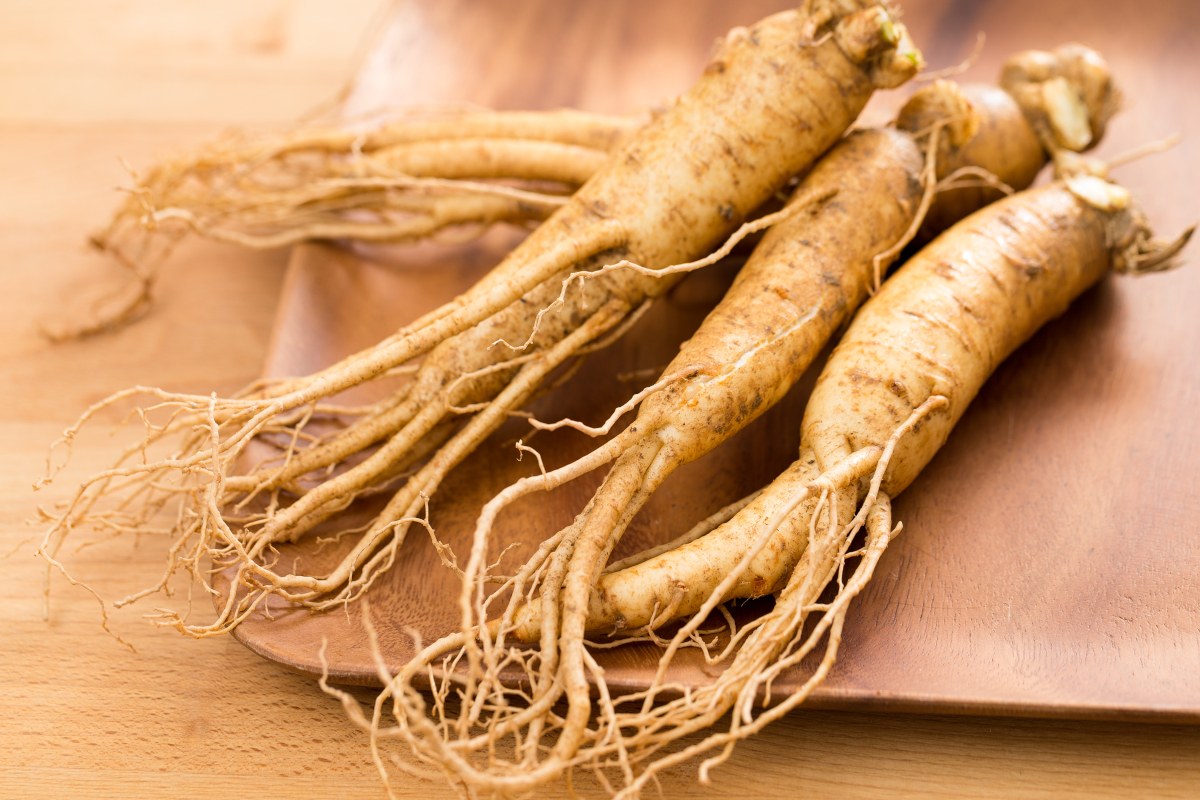
There are different types of ginseng. Of particular interest are Asian ginseng (Panax ginseng), American ginseng (Panax quinquefolius) and Siberian ginseng (Eleutherococcus senticosus). [1]
Asian ginseng is known as Panax ginseng
Asian or Korean ginseng mainly originates from China and Korea. It is also native to Russia and some other parts of East Asia.
The plant has large green leaves and can reach a height of about 30–50 cm. In late summer or early autumn it produces small cream-coloured to yellow flowers in dense umbels. From these flowers red berries develop in autumn.
The plant's root is of particular interest for its health properties. The ginseng root has been used in traditional medicine for centuries.
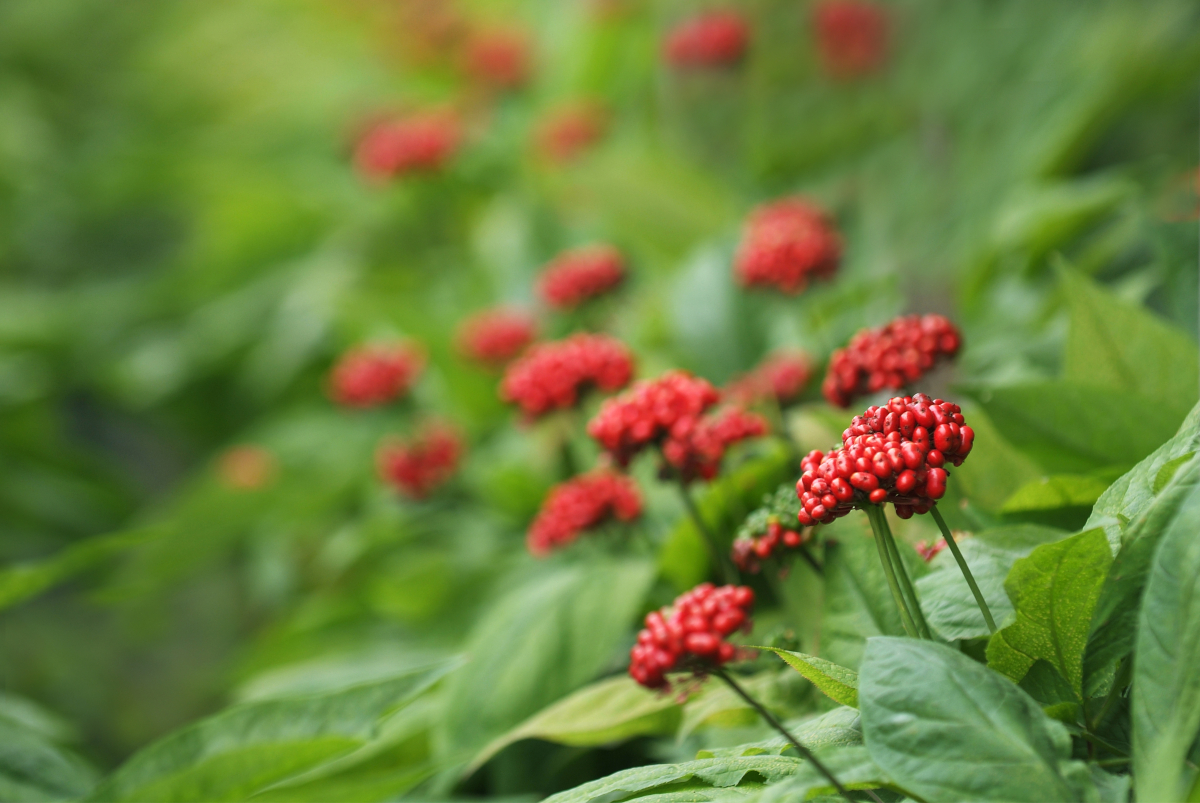
American ginseng is also called Panax quinquefolius
American ginseng is native to the forests of North America. It is found particularly in the eastern regions of the United States and Canada.
In appearance and properties the plant resembles the Asian variety. It also has large leaves. In summer it forms inconspicuous, greenish-yellow flowers that grow in an umbrella-like arrangement. American ginseng roots are also used in traditional medicine and are valued for their health benefits.
Siberian ginseng is also called Eleutherococcus senticosus
Siberian ginseng, also known as eleuthero, comes from the forests of Siberia. It is also native to other parts of Asia, including China and Japan.
Unlike the other ginseng species, Siberian ginseng is a shrub. It can reach a height of up to 2 metres. Its leaves are pinnate and it produces small, inconspicuous green flowers.
Siberian ginseng roots are also used for medicinal purposes. They are considered adaptogens, i.e. they can increase the body's resilience to stress.
Ginseng is known worldwide for its health benefits. It is used in traditional medicine and is often included in various dietary supplements and medicinal products.
Ginseng – powerful panacea for millennia
Ginseng has a long tradition in the cultures where it is native. It has been used in traditional medicine for millennia and has since gained worldwide recognition.
Traditional Chinese Medicine
Traditional Chinese Medicine (TCM) dates back to around 3500 BC. The ginseng root is regarded in TCM as the "queen of medicinal plants".
It is used in numerous formulations to strengthen life energy (Qi), calm the mind and promote health. Ginseng is considered an adaptogen in TCM, i.e. it supports the body in coping with stress. [2]
Korean medicine
Ginseng also plays a central role in Korean traditional medicine. Korean ginseng is often considered higher quality than American ginseng. It is used in various forms such as tea, extract or as a raw powder.
In Korea ginseng is used to improve physical and mental performance and to strengthen the immune system.
Medicine of the indigenous peoples of North America
American ginseng (Panax quinquefolius) is also known as a traditional medicinal plant among the indigenous peoples of North America. Native American peoples used the root for various medicinal purposes, including strengthening the body and promoting vitality.
Modern applications
Today ginseng is used worldwide as a dietary supplement, in naturopathy, in the cosmetics industry and in pharmacy.
The main application areas focus on
- increasing energy,
- improving mental clarity,
- strengthening the immune system,
- coping with stress.
Numerous studies have examined the efficacy of this valuable plant. Positive effects have been observed on cognitive function [3], the immune system, energy metabolism and overall quality of life.
The constituents and active compounds of the traditional medicinal plant
Ginseng contains a variety of active compounds that are believed to be responsible for its health benefits and that act synergistically as a whole.
- The most important active constituents are the so-called ginsenosides, also known as panaxosides. These are triterpene glycosides specific to the ginseng plant. There are different types of these plant compounds, including Rb1, Rb2, Rc, Rd, Re, Rf, Rg1 and Rg2, each of which may have different biological activities.
- Ginseng roots contain complex carbohydrates or polysaccharides. These support the immune system and may have anti-inflammatory properties.
- Short chains of amino acids or peptides have antioxidant properties and can protect the body against free radicals.
- The plant's phytosterols have cholesterol-lowering properties and can contribute to heart health. [4]
- Flavonoids are antioxidant compounds that can help protect cells from damage by free radicals.
- Polyacetylene compounds have anti-inflammatory properties and can strengthen the immune system.
- Finally, ginseng contains various vitamins (such as vitamins B, C and E) as well as minerals (such as iron and potassium). These can contribute to general health.
It is important to emphasise that the efficacy of these various compounds and their exact mechanisms are still being intensively researched.
The totality of the active constituents in ginseng roots makes them a popular plant in traditional naturopathy and as a dietary supplement.
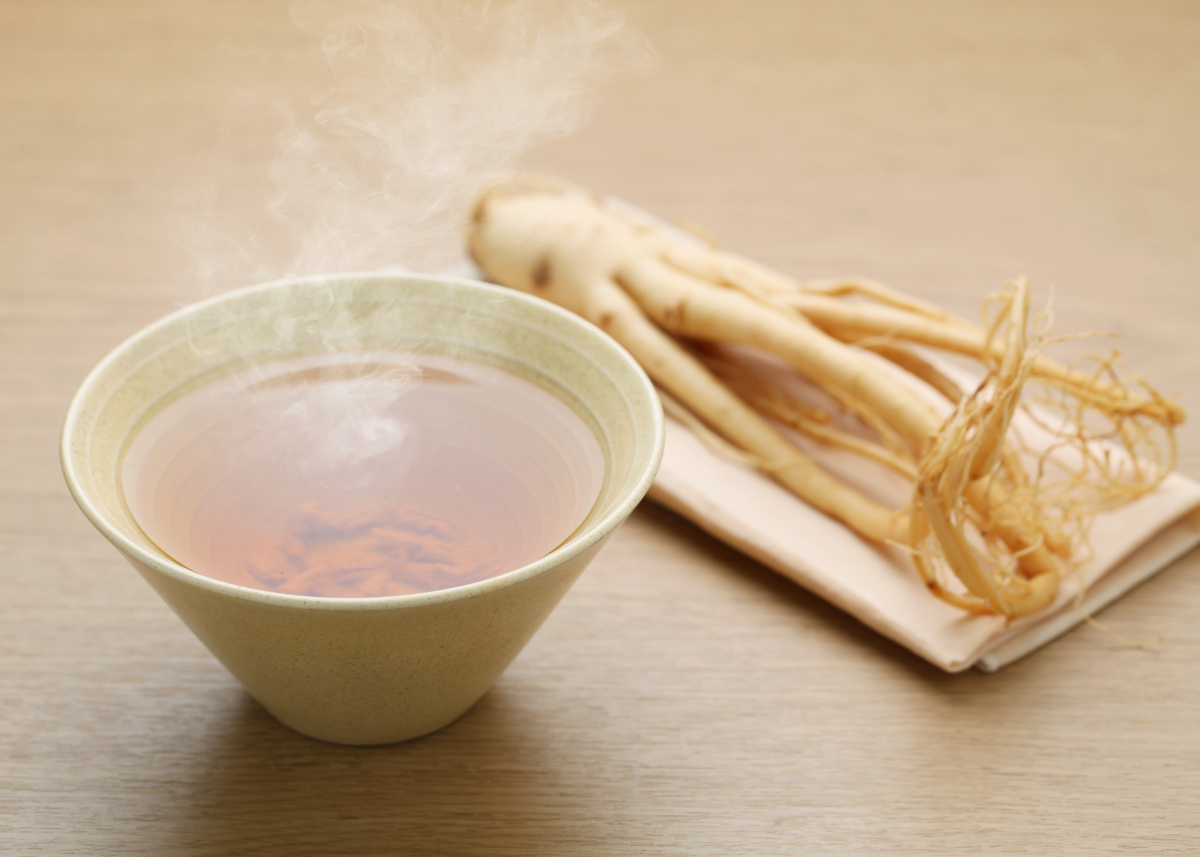
The healing powers of ginseng roots
Effects of ginseng
Ginsenosides are the main active substances in the ginseng root. The following properties are attributed to them:
They act as adaptogens. This means they can help the body adapt to stressful situations. They support the regulation of stress hormones and promote general wellbeing by making the organism more resilient to stress.
They can improve performance by promoting energy production in the cells. This can lead to increased endurance and reduced fatigue, especially during physical exertion.
It is believed that the plant compound can improve cognitive functions such as memory and attention. It is said to have neuroprotective properties that may help protect the brain from oxidative stress and neurological diseases. [5]
Adaptogens are also attributed immunomodulatory properties. Thus they can strengthen the immune system. They support the production of immune cells and enhance the organism's defence against infections.
Anti-inflammatory properties are also suspected in the root, which may help alleviate inflammation in the body. This can be particularly beneficial for people with inflammatory or chronically inflammatory conditions.
Finally, this compound is also valued for its antioxidant properties. These can help reduce cell damage caused by free radicals, thereby slowing the process of skin ageing and providing a general anti-ageing effect.
The positive properties can vary depending on the type and dosage. People considering ginsenoside preparations should seek expert advice.
Use of ginseng
Ginseng is a traditional medicinal plant that also receives a lot of attention in research.
Traditionally, Panax ginseng C.A. Meyer is known for its effects on memory [6] and energy metabolism. The many constituents offer further applications. [7] Relevant studies can also be found.
The remedy is recommended or being investigated as an adjunct for the following health issues:
- regulation of blood glucose [8] [9]
- cardiovascular diseases [10] [11]
- sleep disorders
- allergies [12] [13]
Cancer therapies
Cancer is a major challenge. Research on Panax ginseng is therefore also turning to the topic of cancer and cancer therapies.
On the pages of the following institutes you can find interesting publications on cancer and cancer therapies. Naturopathic approaches are the focus.
- CAM Cancer - Complementary and Alternative Medicine for Cancer [14]
- Norway's National Research Center in Complementary and Alternative Medicine [15]
Here the focus is primarily on the tolerability of conventional cancer therapies. Side effects of cancer therapies such as fatigue and exhaustion can often be reduced with the help of ginseng and wellbeing can be improved. [16]
Ginseng as a medicine and remedy: extracts from the dried root
The ginseng root
Traditionally the root has been used as a remedy for millennia. As already described, three cultivation regions are the focus of the plant's use as natural medicine.
As with any plant, climatic growing conditions, soil, cultivation and the age of the plant decisively determine the quality. They also influence the type and concentration of ginsenosides.
So that the valuable active compounds can accumulate well and the root meets medicinal quality criteria, the plant should be at least 4–7 years old. The white roots are harvested in autumn, then cleaned, dried and processed further. This is another important aspect of quality assurance. Careful processes are required to preserve the constituents during processing.
White versus red ginseng
The name "white ginseng" comes from the pale, cream-coloured or beige colour of the dried root. This process can be achieved by sun-drying or by technical drying methods.
"Red ginseng" is essentially the same plant subjected to a different processing method. Red ginseng is produced by steaming the fresh root before drying. This process lasts several hours. It leads to a change in the chemical composition of the root and gives it a red colour. This root is then dried as well.
The drying process should be as gentle as possible so that the red pigments in the root are not lost during this process. They also influence the final ginsenoside content.
The content and type of ginsenosides can vary depending on the processing method. The choice between white and red ginseng often depends on individual preferences and the intended use. Some people prefer the milder taste of the white ginseng root, while others favour the red variant.
Quality assurance
Quality is a matter of trust. Certifications can help ensure and guarantee that quality standards are met. They can be a great aid when choosing products.
Certifications such as GMP (Good Manufacturing Practice) can indicate that the product comes from high-quality production.
How is ginseng used?
Ginseng can be used in various ways depending on the needs and individual preferences of the person. As it originates from the traditional medicines of different regions, these also provide clues about its use.
Today, common forms of application are:
1. Dietary supplements in the form of capsules, tablets, as powder or tonic. These preparations allow precise dosing and are usually taken as a daily supplement.
2. Tea is prepared from dried ginseng roots with hot water. It can also be brewed from the raw root. Ginseng extract is also available in tea bags. It can be flavoured with honey or lemon juice.
3. Raw consumption: Some ginseng enthusiasts chew fresh ginseng. However, this method is less common because fresh ginseng roots are often very bitter and require longer preparation to make them palatable. Ginseng is also used as a spice.
4. Cosmetic products: Due to its anti-ageing effect, the medicinal plant is found in various skincare products such as facial creams, serums and masks. These products are intended to revitalise, firm and rejuvenate the skin. It can also be a valuable ingredient in shampoos and conditioners.
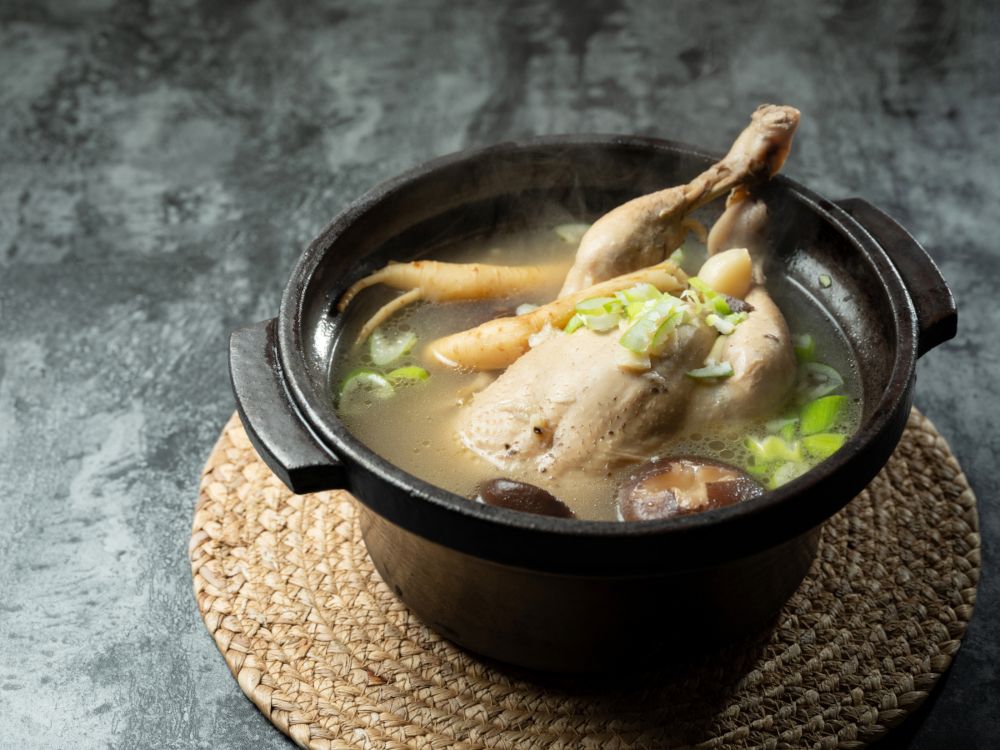
5. Traditional preparations: In traditional Chinese and Korean naturopathy, ginseng is often used in special soups or broths. These are made by cooking the plant with other herbs and ingredients.
Possible risks and side effects
The use of ginseng root and its ginsenosides is generally considered very safe.
Because ginseng has oestrogen-like effects, it should not be used during pregnancy, breastfeeding or by children.
Occasionally more serious side effects have been observed, such as asthma attacks, increased blood pressure, palpitations or the risk of cardiac arrhythmias and uterine bleeding in postmenopausal women.
Ginseng is one of the highly active medicinal plants. Its use can have positive effects on blood clotting, blood glucose levels and other bodily parameters and conditions. Therefore, interactions with medications should not be underestimated. Regular monitoring of values and adjustment of dosages is advisable.
Keywords for this article
Panax Ginseng C. A. Meyer, Asian ginseng, American ginseng, ginsenosides, adaptogens, TCM, stress management, energy increase, strengthen the immune system, antioxidants, energy booster, cognitive enhancement, anti-ageing, diabetes management
Figure 1: leungchopan/shutterstock.com ; Figure 2: photofull/shutterstock.com ; Figure 3: tarapong srichaiyos/shutterstock.com ; Figure 4: mnimage/shutterstock.com

