

Experience, studies and meta-analyses clearly speak
for the evidence of its effectiveness - by Jan Scholten
Objections to Homeopathy
The typical objections can be summarised in two points:
- First, there is no proof that homeopathy works; that is, that there are no scientific studies and no evidence for the efficacy of homeopathy.
- Second, homeopathy cannot be effective because its remedies consist only of water; that is, the remedies contain no chemical active ingredients and therefore could not be effective.
1. Evidence
There is more than enough evidence for the effectiveness of homeopathy. First of all, the many patients who have been treated homeopathically over 200 years. They preferred homeopathy despite all opposition. Doctors also turned to homeopathy, often after having been clear opponents of it. But today evidence is demanded, usually in the form of double‑blind studies, referred to in international technical terminology as RCTs, "randomised controlled trials". Meta‑analyses combine several such studies to reach a conclusive result about a form of treatment. There are now several meta‑analyses of homeopathic studies.
- Kleijnen and Knipschild evaluated 107 clinical trials. Their conclusion: At present the evidence for effectiveness is positive.
- Boissel and Cucherat analysed 15 studies. Their conclusion: There is evidence that homeopathy is more effective than placebo. The results of our meta‑analysis are not compatible with the hypothesis that the clinically observed effects of homeopathy are solely attributable to placebo effects.
- Linde analysed 89 studies in 1998 and summarised: The results of our meta‑analysis are not compatible with the hypothesis that the clinical effects of homeopathy are solely attributable to placebo effects.
- Linde analysed 32 studies in the same year and concluded: The results of the available randomised trials suggest that individualised homeopathy is more effective than placebo.
- Mathie evaluated 93 clinical trials and concluded: The total body of research indicates that the null hypothesis should be rejected in favour of homeopathy.
Conclusion
All five meta‑analyses concluded that homeopathy is an effective method and that its effectiveness cannot be explained by the placebo effect. In general, two positive meta‑analyses are considered sufficient to accept a scientific finding.
Discussion
A further study by Shang received a great deal of media attention, in which the "end of homeopathy" was repeatedly proclaimed. Shang very selectively chose only eight studies and compared them with eight further studies from conventional medicine. This selection led him to the conclusion that homeopathy is a placebo effect. Only this one conclusion made the headlines, although Shang simultaneously admitted that he had seen indications of a specific effect of homeopathic remedies; he nevertheless attributed these to the placebo effect.
Rutten and his colleagues successfully argued against Shang's final conclusion and were able to show that almost any other selection than Shang's would have demonstrated the effectiveness of homeopathy. Aside from that, Shang's study was not a true meta‑analysis but a comparison of homeopathic and conventional medicine.
The meta‑analyses mentioned above show that homeopathy is effective and that this effectiveness cannot be explained by the placebo effect. When you read the authors' conclusions, you can feel that they were not particularly pleased with the results of their own analyses. One has the impression that they apologised for their results, as if trying somehow to explain them away.
2. Contents – what is in them?
This brings us to the second objection to homeopathy: "Homeopathy cannot work because there is nothing in its remedies. They are potentiated and thus so highly diluted that not a single molecule of the original substance remains."
There are several arguments against this objection.
Theory and experience are confused
The second objection cannot explain away the experience. A true scientist adapts their theory to the results of experiments, not the other way around. That is precisely what the opponents do when they claim "homeopathy cannot work because there is nothing in it".
Information instead of chemistry

Conventional medicines are based on chemical reactions in the body. By contrast, one best considers homeopathic remedies as "informational medicines". The information is transferred from the original substance by shaking the remedy at each potentiation step. In this way the carrier [water‑ or lactose‑based] becomes imprinted with the information of the original substance. One can compare this information aspect to storage on computer disks. Homeopathic remedies are chemically all the same, just as CDs remain chemically identical no matter what is recorded on them. Only the information they carry is very different, and only this triggers the effects. The content of a disk can vary widely, from Bach's music to family photos or films like Avatar or a software programme. Likewise, a homeopathic remedy can convey infinitely diverse information.
Potenices have physical effects
That homeopathic remedies are not "just water" has been demonstrated in many experiments.
Rey was able to show that potentiated water stores information similar to that of the original substance.
Lo showed that ice has many anomalous states.
Chikramane proved that homeopathic potencies preserve nanoparticles of the original substance.
Wolf showed that potencies differ from water.
Czerlinski showed that water preserves structural domains that follow regional substances.
Theory of water as information carrier
Rey demonstrated that water can store information.
Discussion
The problem, as already mentioned, is a paradoxical conflict between theory and experiment. This is explicitly evident in a lecture by Vandenbroucke, in which he says: You cannot simply say, "here we have evidence from controlled studies of type Ia, and therefore we must follow it, because that would directly lead us to acceptance of homeopathy. But if we accept that an endlessly continued dilution can be effective, we must discard an entire system of chemical and physical insights that underpins not only medicine theoretically. That price is too high. Therefore we remain with this dogma and prefer to keep a critical distance from the facts."
Vandenbroucke, an epidemiologist and opponent of homeopathy, makes the mistake of adjusting experimental results to the theory. Those who work scientifically must instead adapt theory to experiment.
Secondly, his conclusion is wrong that accepting the facts would lead to "having to discard an entire system of chemical and physical insights". The only thing that would need to be changed is to add something to the system of chemical and physical knowledge: information.
|
The most beautiful and deepest experience a man can have is the sense of the mysterious. It is the source of all true art and all true science. He to whom this sense is a stranger, who is no longer able to wonder and stand rapt in awe, is as good as dead. To know that what is impenetrable to us really exists, manifesting itself as the highest wisdom and the most radiant beauty, which our dull faculties can comprehend only in their most primitive forms — this knowledge, this feeling, is at the centre of true religiosity. In this sense—and only in this sense—I belong to the deeply religious persons. |
The English original of this article can be found on Jan Scholten's website:
http://janscholten.com/uncategorized/evidence-for-homeopathy/
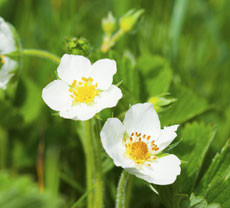
Photos: Shutterstock wild strawberry, echinacea
Works by Jan Scholten
 |
Secret Lanthanides |
 |
Homeopathy and the Elements The main work by Jan Scholten opens the periodic table for homeopathic remedy selection. 880 pages, hardback, Item no. 00239, € 85.- |
 |
Homeopathy and Minerals A great book! The first step to a broader understanding of mineral remedies 304 pages, paperback, Item no. 00238, € 35.- |
 |
Wonderful Plants A new homeopathic botany A milestone of homeopathic literature. The German edition is more user‑friendly than the English edition and can even facilitate working with the original English edition. 952 pages, hardback, Item no. 15202, € 180.- |
 |
Periodic Table - Theory of the Elements Table Revised version. Now with lanthanides and the uranium series. 2 pages, laminated, Item no. 05149, Price reduced from € 10.- to € 8.90 |
 |
Jan Scholten / Michal Yakir / Jonathan Hardy / Farokh J. Master / Mahesh Gandhi: |
 |
The "Periodic Table of Plants" Psycho‑Congress lecture from 8 March 2013 - presentation by Jan Scholten Seminar highlight on video, 1 video DVD, approx. 2 h 30 min total duration. The DVD is trilingual; the congress can be viewed in German, English and French. 1 DVD, DVD, Item no. 14353, € 45.- |
 |
Scholten Intensive - 4 DVDs The latest findings on the periodic table and plant systematics Berlin, 6–7 March 2010 Seminar highlight on video, 4 DVDs, approx. 10 h total duration, in German. 4 DVDs, DVD, Item no. 07867, € 95.- |
 |
Jan Scholten Seminar 2008 - 4 DVDs Seminar from 15–16 March 2008 Introduction to the systematics of mineral and plant remedies Seminar highlight on video, 4 DVDs, 12 h total duration, in German. 4 DVDs, DVD, Item no. 04384, € 95.- |
|
The Elements Method in 30 Minutes - 1 DVD Jan Scholten in interview with Heidi Brand, Kandern in March 2008 1 DVD, Item no. 04414, € 10.- |
 |
Jan Scholten in Portrait - Researcher, Doctor and Person - 1 DVD Jan Scholten in interview with Heidi Brand, Bad Krozingen, March 2013 1 DVD, running time approx. 65 min. 1 DVD, DVD, Item no. 14705, € 14.80 |
 |
The Botanical System - Jan Scholten in Interview - 1 DVD Jan Scholten in interview with Heidi Brand, Berlin March 2010 1 DVD approx. 30 min 1 DVD, Item no. 09170, € 10.- |
 |
Repertory of the Elements - English 352 pages, hardback, Item no. 00285, price reduction from € 50.- to € 48.- |
