 |
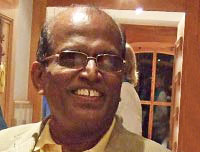
Dr A. U. RamakrishnanInterviews with Homeopaths | Hpathy Ezine (1) |
|
Alan Schmukler: Welcome to Hpathy. We are pleased that you honoured us with your visit. You are known for treating very severe cases. How can you remain positive and optimistic and give courage to your patients? Do homeopaths need a spiritual dimension for their work? A.U. Ramakrishnan: Working homeopathically is the most fascinating experience one can imagine. Homeopathy reveals the extraordinary possibilities in human beings, the power of life energy... the highest healing force. Therefore I have the positive conviction that I can always do something that improves my patients' health condition. That does not always mean complete cure. I am by no means unaware that there are irreversible diseases. But homeopathy can help everyone to the greatest possible improvement under the given circumstances.
Regarding your question whether homeopaths need a spiritual dimension... that is indispensable, and in my view every doctor needs a spiritual dimension, whether they are a homeopath or not. Alan Schmukler: You are one of the world’s leading experts in cancer therapy. How did it come about that you have dealt so intensively with this disease? Is it realistic to expect a "cure" for certain cancers at all? A.U. Ramakrishnan: I do not know whether I am an expert, but I have treated thousands of cases over the last 20 years, and that has given me a certain edge in therapy... and has also humbled me often enough. In summary: in the early stages (stage I and II) one can be very optimistic, and even in stage III one may be more optimistic today than I believed ten years ago. Overall I believe that we can make a valuable contribution. Alan Schmukler: You have said: "For healing to be successful, the patient must have knowledge of his inner self and must possess inner balance." How do you help patients achieve this? How much do you involve yourself in the patient's life? A.U. Ramakrishnan: I try, whenever possible, to take as much time as I can within an extra-long consultation to get to know the patient's way of life; then I make my therapeutic suggestions. This often triggers major changes. But there are also times when someone cannot make changes in their life for certain reasons. Life is not that easy, but we must not give up; we must keep trying. Alan Schmukler: It is generally assumed that early diagnosis is an important factor for successful treatment. Do you rely on blood tests or other diagnostic means to detect early stages of cancer? Are there specific blood values that indicate a precancerous condition? A.U. Ramakrishnan: I rely on the same tests as oncologists... Certain diseases such as prostate cancer can be detected in a blood test before their actual onset... e.g. by an elevated PSA level (2). A Pap smear (3) allows early detection of cervical cancer... Sometimes a routine gastric lavage can already indicate a stomach cancer beforehand. Therefore — especially after the age of 40 — annual check-ups are advisable, above all examinations such as endoscopy (4) of the upper gastrointestinal tract and colonoscopy. Alan Schmukler: The newer homeopathic schools tend to focus more on the psychological and mental symptoms. One approach claims that a remedy that addresses the patient's underlying life conflicts is sufficient to treat the tumour. What is your opinion on that? A.U. Ramakrishnan: That is true, and I also usually proceed that way in my cases, except in cancer. Cancer progresses extremely rapidly and spreads to other areas (metastasis), and that forces us to apply a technique that acts immediately and directly on the pathological process. That is the reason for choosing an organ-related remedy. Alan Schmukler: Even enthusiastic homeopaths mostly run to conventional "specialists" when a life-threatening disease is diagnosed. Therefore "fresh" cancer cases do not often come to the homeopath. Most cases we get are "fully treated" — i.e. conventional doctors have given up on them. What percentage of the cancer cases you see in a year are new diagnoses? A.U. Ramakrishnan: You are right. That is the reality, and therefore of the approximately 12,000 cases I have treated (it may even have been more), more than 9,000 were stage IV. However, that does not mean that nothing can be done. Not every case you take on can be cured. Yet we can give your patients a valuable extended time of life, and that makes our efforts worthwhile. Alan Schmukler: For what reasons do "new" patients decide to consult you rather than a conventional doctor? A.U. Ramakrishnan: Mostly by word of mouth. A friend or relative who has been through the conventional mill tells them about the poor experiences they had. That prompts new patients to look for alternative routes and brings them to your practice. And I tell you, that is not uncommon! Alan Schmukler: Patients often ask: "Can you cure me?" If you say "No!" the patient will not want treatment from you. If you say "Yes!" you can get legal trouble. How do you deal with patients' questions and expectations? How can you give a prognosis in such cases? A.U. Ramakrishnan: No, thank God not. But I usually have patients sign an informed consent before starting treatment. Homeopathic consultation is an additional recommendation and in no way impedes the implementation of conventional procedures and their possibilities. Alan Schmukler: You often visit other countries to treat cancer cases. In most countries, however, homeopaths are not legally allowed to "treat" cancer. How do you deal with this dilemma? Alan Schmukler: Can you work homeopathically if radiation, chemotherapy and other allopathic methods are being used? Doesn't that interfere with homeopathic treatment? Alan Schmukler: What problems can arise and what precautions are required in a homeopathic treatment when there is organ damage, for example in Parkinson's syndrome? Alan Schmukler: Sometimes the constitutional remedy is hard to find. Is it absolutely necessary for the cure in a cancer case? Alan Schmukler: When choosing an organopathic remedy, must the symptoms of the remedy picture match those of the patient, or is the site of the tumour a sufficient indication? Alan Schmukler: How long do you continue treatment of cancer patients after the tumour has disappeared? Alan Schmukler: Thank you, Dr Ramakrishnan, for taking the time for this interview. Your knowledge and thinking inspire us and give many people hope.
|
|
|
************************************************************************* |
|
|
Dr Ramakrishnan MBBS (5), MF Hom (6), PhD (7), is an internationally renowned Indian physician. He travels around the world, gives lectures on homeopathy and treats difficult cases. He is an expert in heart disease, cancer, multiple sclerosis, epilepsy, arthritis and diabetes. He is the homeopathic physician to the President of India. You can reach Dr Ramakrishnan at: Rajarathnam Str. 22, Madras-600 010, India. |
|
| ************************************************************************* | |
|
(1) i.e. Homeopathy for Everybody, Ezine = electronic magazine (2) prostate-specific antigen (3) Pap smear: developed in 1928 by the Greek doctor George Papanicolaou for early detection of cervical cancer. (4) endoscopy (5) Bachelor of Medicine, Bachelor of Surgery (6) homeopathic physician (India) (7) Doctor of Philosophy |
|