
The Placenta as a homoeopathic remedy - e study
by Hans Eberle and Friedrich Ritzer
The birth of a child in 1995 in one of our families gave us the idea to consider the placenta as a homoeopathic remedy. We were also made curious by the fact that placenta is used in Chinese medicine as a remedy for asthma. The remedy was prepared by us according to the instructions in § 270 of the Organon of the Healing Art in potency C3. The test substance was potentised by us in Q-potencies from Q1–Q12. A total of 18 provers were involved in the project. The Helios Pharmacy markets this remedy under the name “Placenta (Eberle / Ritzer)”; it is available there up to XM potency.
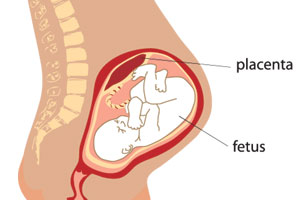
Areas of activity
Care, breastfeeding, detachment, children, ears, throat, larynx, intestines, genitals, exhaustion
Key symptoms
IDEALISATION
- From idealism taking on too much care for close relatives and overexerting oneself in the process (exhausted housewives and mothers)
- Idealistic love for a sick partner (alcoholic)
- Separation and detachment from the supposedly ideal partner not carried through
- Women want another child (beyond their strength) because of longing for the ideal phase of life that each new child brings
DISAPPOINTED IDEALS
- Love is soon disappointed after the start of the relationship
- Sadness because of the limits placed on reciprocal exchange and togetherness
Common features
• FOLLOWING IN THE FOOTSTEPS OF OTHER PEOPLE
• FREEING ONESELF FROM AN OBSESSIVE THOUGHT OR FROM AN UNCONSCIOUS IDEA OF DUTY, FOLLOWING ONE'S PARENTS OR OTHER CLOSE PERSONS (EVEN INTO DEATH)
• BECOMING MATURE AND INDEPENDENT
• DEPENDENCY
• FEELING ISOLATED
• INHIBITED BEHAVIOUR
• WHINY CHILDREN WHO CLING TO THE MOTHER
• AFTER THE DEATH OF A PARTNER
• REMEDY FOR DYING PATIENTS
• RETAINED PLACENTA
• INFECTIONS
• Whiny children who cling to the mother and suffer from otitis media (similar to Pulsatilla), or who are moody and angry and hit their mother
• Throat pain with a feeling of dryness
• Hoarseness (female teachers lose their voice with every cold and dread it beforehand)
• Bronchitis, asthma
• NAUSEA (nausea in pregnancy)
• DIARRHOEA; stool spurts out, yellow, watery, slimy, with cramps
• EXCESSIVE SEXUAL DESIRE
• BACK PAIN AND SENSATION OF COLD IN THE BACK
• EXHAUSTION
- Exhausted mothers, housewives and other carers
- Parents of disabled children
- Anaemic cancer patients
• CHILLINESS, FEELING COLD
CASES
Woman, 32 years old: Paralytic symptoms, fatigue, worrying, cares for others.
Summary:
Patient with paresthesias. Loss of a twin in late pregnancy. 11 years of intensive caregiving in her family of origin. Illness of her daughter with severely aggressive behaviour, sleep disturbance and anxiety symptoms. The patient is a friendly, uncomplaining, naturally mild, helpful young woman.
DIAGNOSIS
The patient suffers from tingling in the forearms and legs, as if ants were crawling on her. Tired eyes.
BACKGROUND
At 21 she had her first pregnancy with twins. A twin died in the seventh month of pregnancy.
After the birth the patient immediately had to work as a chambermaid, and in the evenings as a waitress. At 25 the patient had another child and had to continue working hard.
Two years later her brother had a serious accident with severe internal injuries: “His internal organs literally exploded from the fall.”
A year later, at 28, she and her husband built a house and she also helped her father to erect a barn on the farm.
A year later her father had a heart attack. The next day her mother fell from a tree, and she took over her parents' farm in addition to her own professional activity and family duties; she also had to look after her infirm grandmother.
Finally her daughter developed Hashimoto's thyroiditis; during treatment she received an overdose; for months she displayed disturbed behaviour with aggressive outbursts, hitting, insomnia and anxiety attacks.
Then the patient herself became ill: twice in succession she suffered attacks of numbness and visual disturbances: she saw air bubbles falling downwards. After these illnesses the patient developed the paresthesias described above.
While she reported all this, the patient remained lovable, friendly and mild.
ANALYSIS
As if it were only natural, without moaning and groaning, the patient reported her last 11 years: a life full of hard work and worries about her brother, her father, her mother and her grandmother, as well as about her seriously ill daughter and the loss of a twin in late pregnancy.  The patient is not embittered.
Her caring, helpful nature and her wish to live this out professionally by becoming a geriatric nurse, as well as her tendency to physical exhaustion symptoms (sudden hearing loss, visual disturbances) led us to prescribe Placenta.
Original proving symptom
“Functionalised relationship and care of family members with subsequent exhaustion: tries to organise professional work, family, confinement and children as rationally as possible in order to fulfil all their tasks – and ends in exhaustion.”
DREAM AFTER THE
TREATMENT
She runs the laundry in a care home. She is promoted and receives a pay rise.
In fact the patient would like to take the nursing qualification exam “to advance”.
Even in her dreams we again encounter the themes of worry and care.
RESULTS
The paresthesias that had accompanied her for a year were completely cured within six weeks and have now been entirely absent for a year.
Case 2: Man, 45 years old: Crohn's disease, detachment from the mother
The patient has suffered from Crohn's disease for 2 years. The inflammation covers large parts of the entire intestine. The patient suffers particularly from frequent stools in the morning after getting up, and after lunch. He himself describes the stool as mushy, like “pudding”, and bloody. In addition he is troubled by permanent, latent abdominal pain with an urge to defecate.
The illness began immediately after the death of his mother, who died of bowel cancer. She ran a hotel which he operated together with her. “My mother never deviated a centimetre from her views. She equated doing nothing with laziness. Working with her in the hotel was very difficult for me.”
On the other hand he mourns his mother. “I have not mentally let go of my mother. I want to give my mother a ‘mental space’ in the hotel. I miss her presence and have a certain longing for her.”
The patient feels that his concentration is disturbed, as if he were intoxicated.
“I'm lacking mental effectiveness, I'm dizzy, and I don't get going before midday.”
Further symptoms:
Pain in both shoulders at the deltoid muscle, warmth at night. Sweaty smell under the left armpit. Enlarged tongue with tooth imprints.
Cravings: sweets (ravenous appetite), chocolate, cake in any form, preferably cookies, whisky with cola.
Aversion to raw onions: they cause belching.
ANALYSIS
The patient remained emotionally very close to his mother even after her death and tries to imagine how she would have decided or acted.
The original proving symptom for this is:
“In contrast to his former ideas he no longer finds the lifestyle and work of his parents worth imitating.” (P384 above)
In the proving there are 11 symptoms concerning autonomy, independence and one's own path. In a kind of idealised glorification of another person or circumstances they overlook their own path and autonomy.
However the patient has ambivalent feelings towards his mother; he found the relationship stressful, and something of his mother's dictatorial character can be discerned in his words.
Original proving symptom:
“35-year-old prover develops extreme anger against interference from his mother.” (Symptom P383).
We also found that Placenta can be a good remedy in the death of close relatives.
Original proving symptom:
“She feels relieved in relation to the grief over the death of her husband a year ago, even a feeling of lightness and joy.”
Typical ulcerative colitis or Crohn's disease symptoms appeared in the proving.
Original proving symptoms:
Yellow diarrhoea, watery, slimy – violent urge to stool – cramp-like pains in the anus at the end of the diarrhoea – burning and stabbing at the anus after stool, etc.
RESULT
The patient was treated for several months with ascending LM-potencies.
The disease healed completely and without relapse, and the patient has remained symptom-free for many years. The patient also experienced an inner transformation: “Before the treatment I always thought: ‘What would my mother do?’ Now I live more my own life.” These are the symptoms observed in the proving and in the clinic: patients who respond well to Placenta can find their own way by separating themselves from the mother or from other people.
The craving for sweets such as chocolate and cake has also disappeared.
References
Eberle Hans, Ritzer Friedrich, Materia Medica, Healing of Diseases in Modern Life Situations, Munich, Müller&Steinicke, 1999
Order: www.homoeopathieforschung.de
*******************************************************************************************
This article was published on www.interhomeopathy.org
Photos: © shutterstock: Mother with son on the coast - Andrey Grinyov,
© shutterstock: Placenta - mfgaspar
Category: Cases
Keywords: care, breastfeeding, detachment, exhaustion, idealisation, personal identity, dependence
Remedy: Placenta

